Cruises and Civitavecchia: How to Manage Transfers for Your Clients
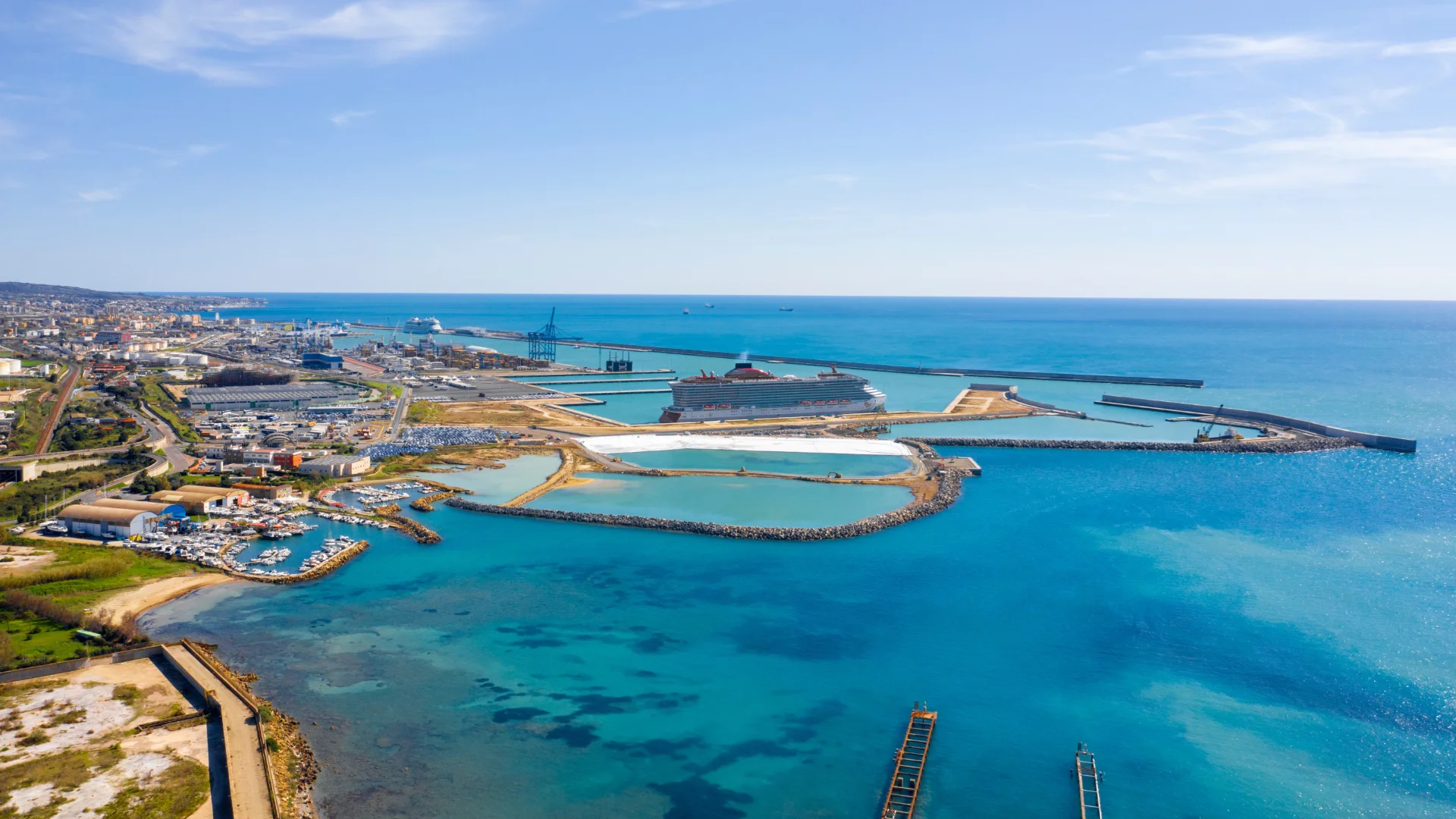
For a tour operator working with cruise passengers, managing the transfer between Rome and the Port of Civitavecchia is one of the most delicate logistical variables in the entire package. A poorly coordinated transfer can undermine the client’s experience from the very first minutes of the trip, generating complaints and lowering the perceived quality of an offer built with meticulous care. Understanding the specifics of this connection — the distance, the rhythms of the port, and the expectations of cruise travellers — is the starting point for structuring a service that truly delivers.
Civitavecchia: Rome’s Cruise Port
Civitavecchia is the main cruise port in Lazio and one of the most important in the Mediterranean. Its strategic location approximately 80 km from Rome makes it the natural embarkation and disembarkation point for millions of passengers each year who, before or after their cruise, want to visit the capital. This flow creates a structural demand for port-to-city transfers that the transport market must satisfy with efficiency and regularity.
Cruise Volumes and Seasonality
Cruise traffic at Civitavecchia follows a well-defined seasonal pattern: the high season is concentrated in spring and summer, with peaks between April and October, when the main Mediterranean routes are operating. During these periods, the quays can simultaneously accommodate multiple large ships, with thousands of passengers boarding or disembarking within the same time windows. For a tour operator, this concentration means planning vehicle availability well in advance to avoid bottlenecks that can be particularly critical during peak season.
In the winter months, volume decreases significantly but does not disappear: transatlantic cruises and certain special routes keep the port active even off-season, requiring a flexible transfer service that can adapt to lower frequencies without any reduction in punctuality standards.
The Expectations of Cruise Travellers
Cruise passengers have a specific profile and specific expectations. They are often experienced travellers, accustomed to high service standards and travelling with significant luggage. Those disembarking after a cruise are generally tired and want to reach Rome quickly and comfortably, without any need to change vehicles or make additional connections. Those embarking, on the other hand, carry heavy suitcases and cannot afford delays that might cause them to miss the ship’s departure.
In both cases, the priority is a direct, punctual connection with adequate luggage capacity. These elements must be at the centre of any evaluation when selecting a transfer partner.
The Logistical Challenges of Port-to-Rome Transfers
Managing the transfer between Civitavecchia and Rome is not as straightforward as it might seem. The route, while not particularly long, is subject to variables that a tour operator must understand in order to plan realistically.
Scheduling Around Cruise Line Timetables
Cruise lines communicate arrival and departure times well in advance, but these timetables can change due to weather conditions, port traffic, or technical delays. Tour operators must build their programmes with an adequate buffer: a transfer booked too close to the scheduled disembarkation time is a genuine source of risk. Proactive coordination with the cruise line, combined with a shuttle provider capable of responding to last-minute changes, is the winning combination.
Coordination with Disembarkation Procedures
Disembarkation operations follow strict procedures set by the cruise line and port authorities. Passengers do not exit all at once: the process happens in groups, and actual timings can extend beyond initial estimates. For a tour operator managing a sizeable group, this means coordinating the collection point with the real-time progress of the disembarkation, without leaving clients waiting for extended periods or risking the bus departing before everyone has boarded.
A best practice is to designate a group leader who manages the collection point at the port and maintains direct contact with the driver or the shuttle operator’s representative, communicating the progress of disembarkation in real time.
How to Choose the Right Transfer Partner for Cruise Passengers
Selecting a partner for the Civitavecchia Port–Rome transfer is a strategic decision, not a commodity purchase. Selection criteria must go beyond the simple per-passenger price and consider the overall reliability of the service.
Vehicle Capacity and Flexibility
Cruise passengers travel with voluminous luggage: large suitcases, backpacks, additional bags. Luggage compartment capacity is therefore a fundamental requirement, equal in importance to passenger capacity. A partner offering shuttles with adequate luggage space reduces the risk of operational problems at boarding. Flexibility in service modulation — the possibility of adding a departure if the group is larger than expected, or of adjusting timetables within reasonable terms — is an additional important evaluation parameter.
Strategic Stops (Termini, Vatican)
For cruise passengers staying in Rome before or after their cruise, the location of the stops is fundamental. Stops in the areas of Rome Termini (Piazza Indipendenza) and Rome Vatican (Via Crescenzio) cover two of the city’s highest concentrations of hotel accommodation. A service that directly connects the Port of Civitavecchia (Largo della Pace) to these two hubs allows cruise passengers to reach their hotel with minimal additional transfers, significantly improving the overall experience.
For the tour operator, being able to provide clients with precise and easily accessible stop locations — without any need for additional taxis or public transport — is a concrete added value that can be built into the package communication.
Benefits of a Dedicated Shuttle vs Private Transfers for Cruise Groups
In the port-to-city transfer market, two main options exist: the shuttle service (shared vehicle on a fixed route) and the private transfer (dedicated vehicle). For tour operators managing medium-to-large groups, the shuttle offers structural advantages worth careful consideration.
On the economic side, the cost per passenger for a shuttle is significantly lower than that of a private vehicle for the same route. For a group of 20 or more people, the cost difference becomes meaningful in the package pricing. On the practical side, shuttles operate on pre-established routes and timetables, simplifying communication to end clients: the cruise passenger knows exactly where to present themselves and at what time.
Private transfers remain the preferred choice for very small groups, for VIP clients requiring a personalised service, or for embarkation situations where timing is extremely tight and every minute counts. For most medium-sized cruise groups, however, the shuttle represents the best balance between cost, convenience and operational reliability.
A final consideration is operational responsibility: relying on a structured shuttle partner means having a professional counterpart capable of managing exceptions — delays, schedule changes, assistance needs — without shifting that burden onto the group leader or the tour operator directly.
FAQ on Civitavecchia Cruise Transfers
What are the stops on the shuttle service between Rome and Civitavecchia?
The SIT Bus Shuttle service connects the Port of Civitavecchia (Largo della Pace stop) with Rome Termini (Piazza Indipendenza) and Rome Vatican (Via Crescenzio).
How much does a return transfer between Rome and Civitavecchia cost?
The round-trip ticket for the Rome–Civitavecchia route is available at €25 per person.
Can group bookings be arranged for cruise passengers?
Yes, SIT Bus Shuttle offers dedicated agreements for tour operators managing groups of cruise passengers, with customised solutions for different volumes and seasonal patterns.